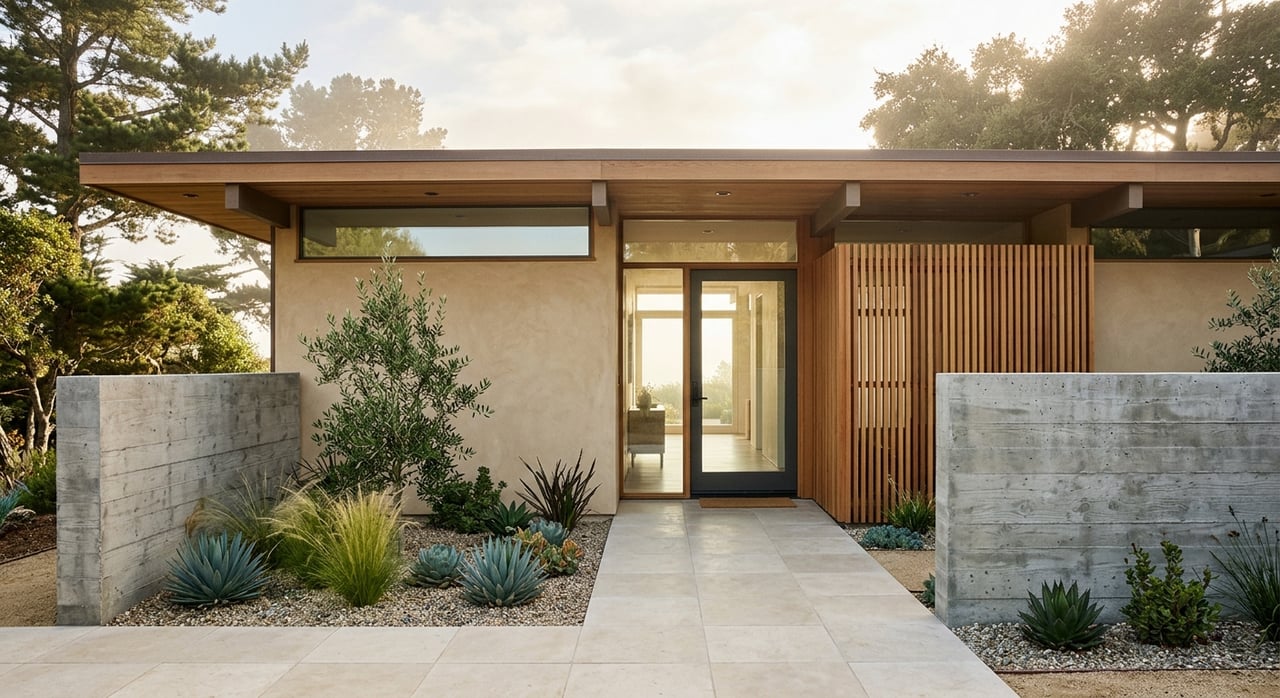
What kind of life do you want your home to support in Brentwood? That question matters here because the neighborhood’s architecture spans several distinct eras, and each one shapes daily living in a different way. If you are drawn to charm, openness, privacy, or strong indoor-outdoor flow, the style of a home can tell you a lot before you even step inside. Let’s dive in.
Brentwood’s architecture tells a layered story
Brentwood is not a single-style neighborhood. It grew over time, beginning with early development tied to Brentwood Park in 1906 along the Westgate streetcar line on San Vicente Boulevard, and today it includes residential streets, hillside homes, and commercial areas within a broader layered landscape.
That history helps explain why Brentwood offers such a wide architectural range. Local records for the Brentwood and Pacific Palisades survey area document Tudor Revival, Spanish Colonial Revival, American Colonial Revival, Ranch and Traditional, Mid-Century Modern, Late Modern, and Ranch and Contemporary homes.
For you as a buyer or seller, that variety is more than visual. It often shapes how a home handles light, privacy, entertaining, and outdoor living.
Why style matters in Brentwood
In Brentwood, architecture and lifestyle are closely linked. The foothill and hillside setting makes orientation, views, and shading important, while Los Angeles’ mild climate supports outdoor living and passive heating and cooling strategies.
That means a home’s style can affect how it feels throughout the day. Morning light, afternoon warmth, room flow, and access to patios or gardens are not just design details. They are part of how you live.
Traditional and revival homes
What defines these homes
Brentwood Park and nearby streets include many traditional and revival-era homes from the 1920s and 1930s. In local survey records, these include Tudor Revival, Spanish Colonial Revival, and American Colonial Revival, along with traditional California interpretations such as Ranch and Traditional homes.
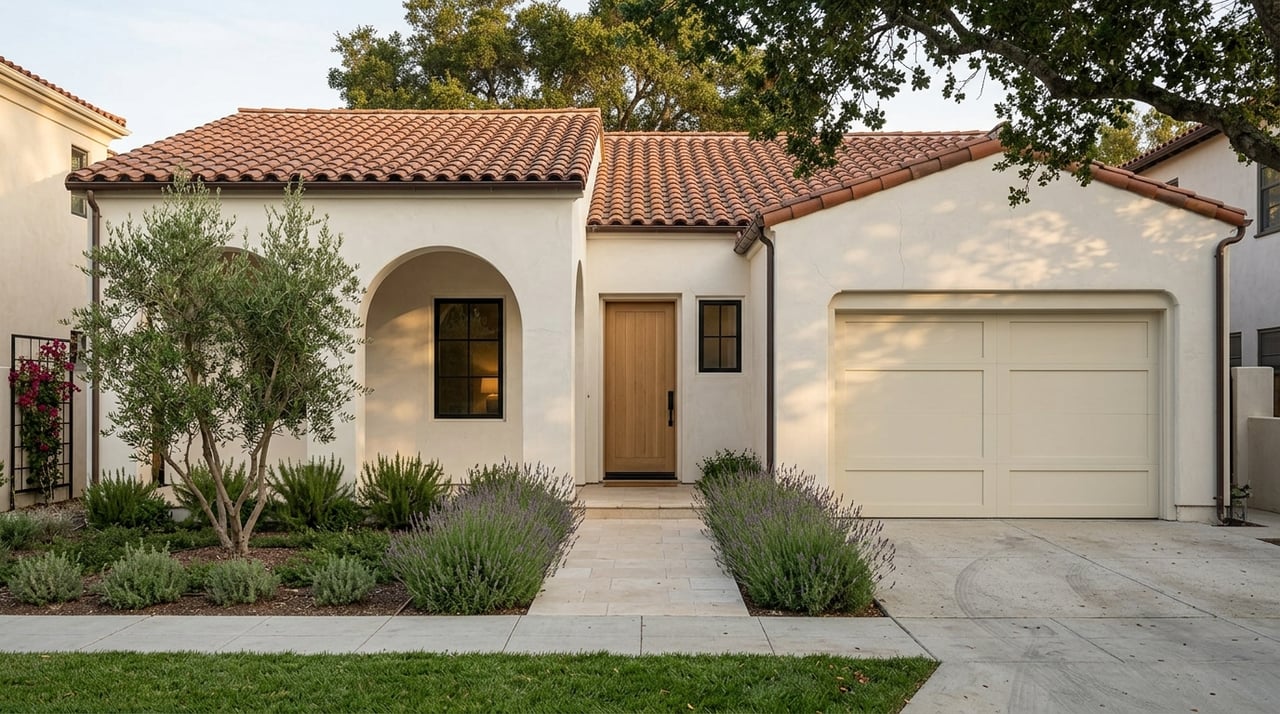
You can often recognize these styles by their exterior features. Tudor Revival may include half-timbering, bay windows, patterned brick, and complex gables. Colonial Revival often emphasizes symmetry, classical details, and front porches. Spanish Colonial Revival commonly features stucco walls, red-tile roofs, and arched openings.
The lifestyle they invite
These homes often feel composed and room-by-room rather than wide open. In day-to-day life, they can create a stronger sense of arrival, more visual privacy from the street, and a layout that separates formal and casual areas more clearly.
That can be appealing if you like spaces with definition. A living room may feel more intimate, a dining room may feel more intentional, and a terrace, porch, or garden may act as a distinct outdoor room rather than an extension of one large central space.
Traditional and revival homes often suit buyers who appreciate:
- a strong sense of entry and structure
- more enclosed rooms for work or quiet time
- architectural detail and historic character
- layered outdoor spaces such as courtyards, terraces, or gardens
Spanish Colonial Revival in Brentwood
Warm materials and softer transitions
Spanish Colonial Revival is especially well suited to Southern California. Its stucco walls, clay tile roofs, and arched openings feel natural in a region shaped by sun, dry summers, and a long tradition of outdoor living.
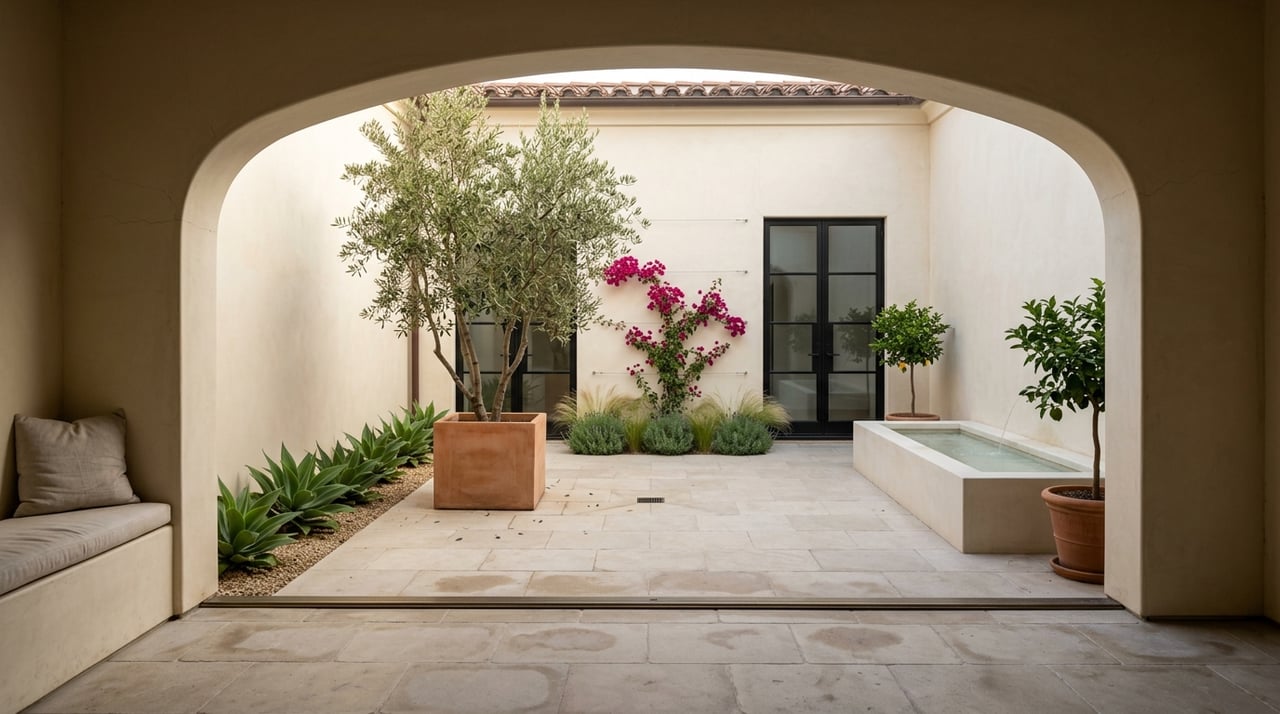
In practical terms, these homes often offer a softer transition between indoors and outdoors. Arches, courtyards, and garden-facing rooms can make the house feel grounded and serene rather than overly formal.
Who tends to connect with it
If you are drawn to texture, privacy, and a home that feels both elegant and relaxed, this style often resonates. It can support entertaining, but in a way that feels intimate and layered rather than fully exposed.
For sellers, this style also tends to photograph beautifully because the materials and massing create depth, shadow, and strong curb appeal. For buyers, it can offer a lived-in warmth that feels timeless in Brentwood.
Tudor and Colonial Revival homes
A more defined floor plan
Tudor and Colonial Revival homes often appeal to buyers who want classic form and visual order. The symmetry of Colonial Revival and the storybook detailing of Tudor homes create a very different first impression from a glassy modern residence.
Inside, these homes often feel more segmented. That can be a plus if you want separate spaces for reading, hosting, working, or winding down without everything happening in one open great room.
Privacy and presence
These styles can also create a stronger buffer from the street. Their more enclosed wall language, layered facades, and established landscaping often support a sense of privacy and presence.
If your ideal home life includes quieter rooms, a formal entry, or outdoor space that unfolds gradually, these homes may feel especially comfortable.
Mid-century modern homes
Brentwood’s postwar design legacy
Brentwood has a meaningful mid-century layer, especially in Crestwood Hills. Developed after World War II as a cooperative housing effort by the Mutual Housing Association, this area includes Modern-style homes described by the Los Angeles Conservancy as open-plan designs with large expanses of glass, privacy-conscious siting, and a one-story profile from street level.
The local survey also identifies work by notable architects including Raymond Kappe, A. Quincy Jones, Craig Ellwood, and Hilyard M. Brown. That gives Brentwood real depth for buyers who care about design history and California modernism.
The lifestyle they invite
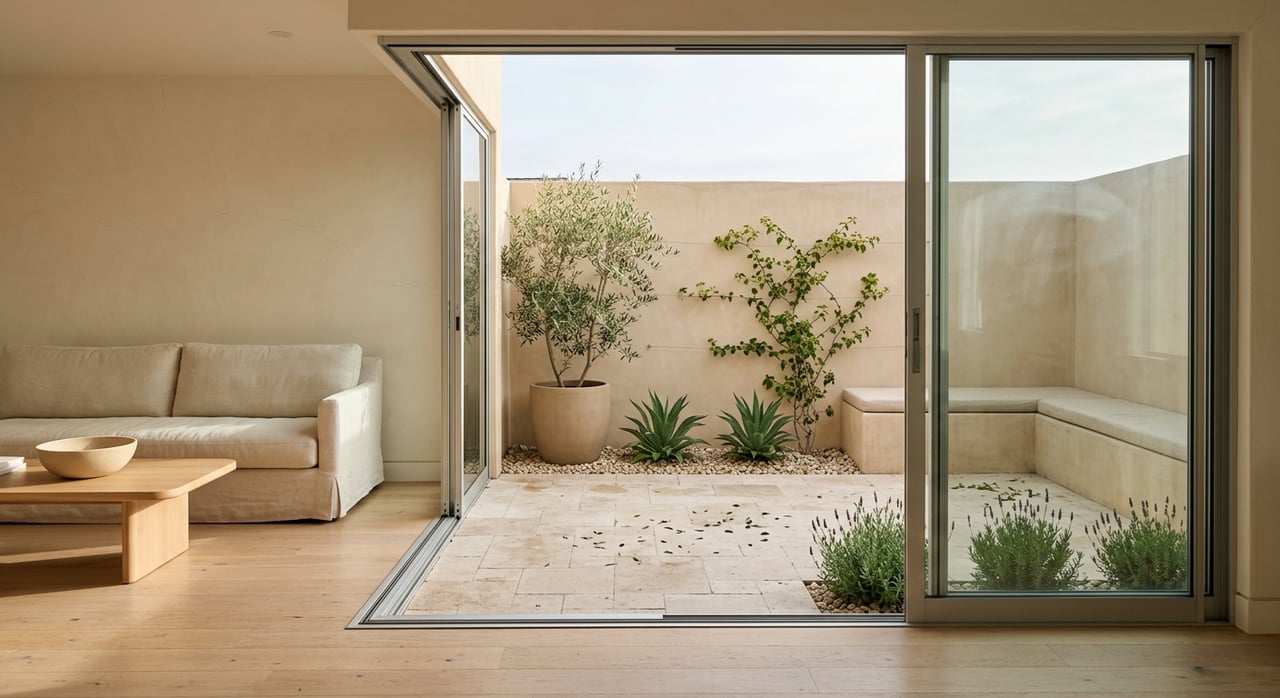
Mid-century modern homes usually feel casual, airy, and social. Clean lines, open plans, strong sightlines, and direct access to decks, patios, or gardens can make the home feel connected to the landscape in a very immediate way.
If you want indoor-outdoor living to be part of the floor plan, not an afterthought, this style often delivers that best. Spaces tend to flow into one another, which can make daily living feel easy and visually calm.
Mid-century homes often appeal to buyers who value:
- open-plan living
- strong natural light
- one-level or low-profile design
- connection to decks, patios, and gardens
- architecture that feels relaxed and design-forward
What to notice on a showing
With mid-century homes, it helps to look beyond the furniture and finishes. Pay attention to how the glass frames the landscape, how private the lot feels, and whether the outdoor areas function as true living spaces.
You may also want to ask what is original and what has been remodeled. In a design-significant area like Brentwood, that context can shape both the experience of the home and its long-term appeal.
Contemporary and later-modern homes
Openness and view orientation
Brentwood’s architecture did not stop evolving after the postwar years. Local records include later examples such as a 1978 Late Modern residence and a 1960 Ranch and Contemporary residence, showing that newer design languages also have a place in the neighborhood.
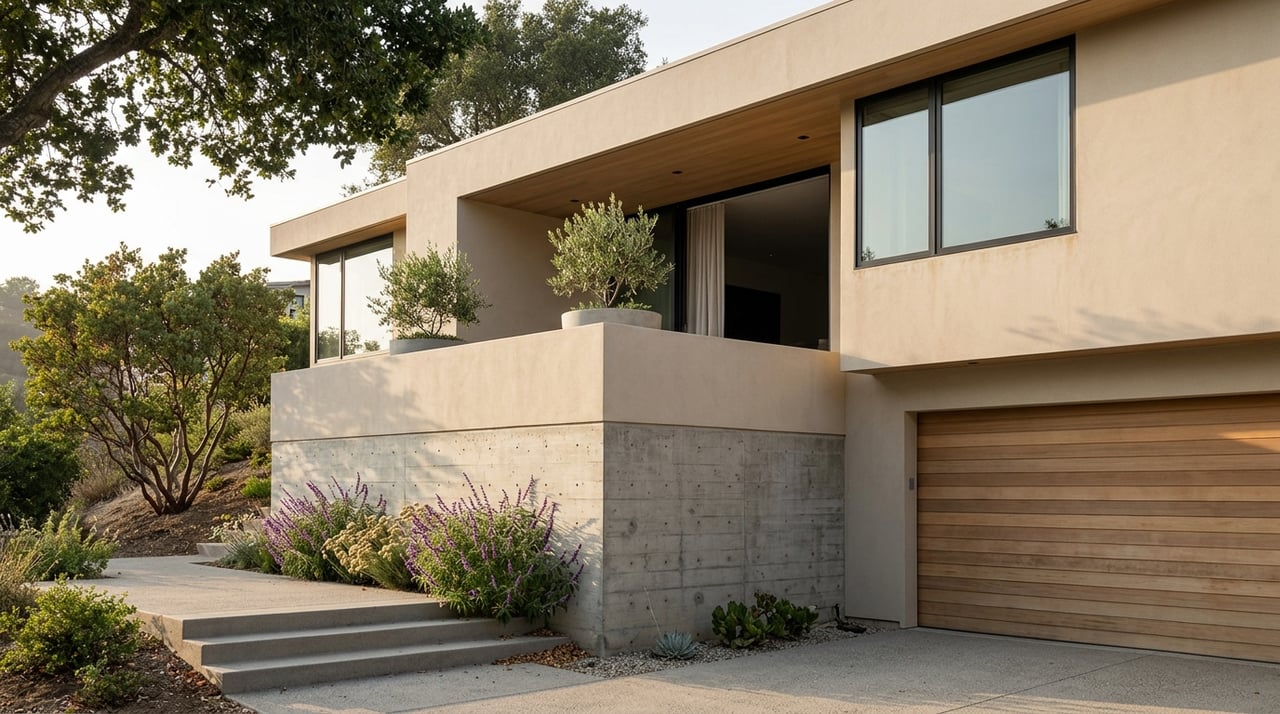
In broader Los Angeles architecture, contemporary homes often prioritize transparency, light, and views through large openings and minimal detailing. In Brentwood’s hillside setting, that can translate into homes that are organized around view corridors, terraces, and expansive primary living spaces.
The lifestyle they invite
A contemporary Brentwood home often feels less about ornament and more about volume, flexibility, and connection. Great rooms, larger glazing, and smoother transitions to pools, courtyards, or terraces can make the home feel visually dramatic and highly adaptable.
This style may be a strong fit if you want a home that supports casual gathering, art display, or a more fluid use of space. It often favors openness and spectacle, especially when the site offers light or views.
Contemporary homes often suit buyers looking for:
- flexible living space
- large-scale entertaining areas
- strong view orientation
- minimal visual clutter
- seamless indoor-outdoor transitions
Traditional vs modern living
How the experience differs
One of the most useful ways to compare Brentwood homes is to think about enclosure versus openness. Traditional and revival homes often create ceremony, sequence, and separation. Mid-century and contemporary homes often emphasize flow, sightlines, and visual connection.
Neither approach is better. The better fit depends on how you want your home to feel on an ordinary Tuesday, not just during a showing.
A quick comparison
| Style direction | Daily-life feel | Common strengths |
|---|---|---|
| Traditional and revival | Structured, private, room-by-room | Defined spaces, classic character, layered gardens |
| Mid-century modern | Casual, airy, connected | Open plans, natural light, indoor-outdoor flow |
| Contemporary and later-modern | Flexible, expansive, view-driven | Volume, transparency, adaptable entertaining spaces |
Questions to ask when touring Brentwood homes
Architecture becomes much more useful when you translate it into everyday language. Whether you are comparing a Spanish Colonial, a mid-century home, or a contemporary hillside property, these questions can help clarify fit.
Ask yourself:
- Which rooms get morning light and which get afternoon light?
- How private does the lot feel from the street and neighboring homes?
- Are the outdoor areas truly usable?
- Does the layout support formal entertaining, casual living, or a mix?
- What features are original and what has been remodeled?
- Do the sightlines, ceiling heights, and room connections match how you actually live?
These are simple questions, but they often reveal more than style labels alone.
Choosing the right style for you
In Brentwood, style is not only about aesthetics. It shapes the pace, privacy, and rhythm of everyday life. A Tudor or Colonial Revival home may offer structure and presence. A Spanish Colonial Revival may bring warmth and layered outdoor rooms. A mid-century home may feel open and easy. A contemporary home may give you flexibility, light, and dramatic connection to the site.
The goal is not to pick the most fashionable style. It is to find the one that supports the way you want to live in Brentwood, from your morning light to your evening routine.
If you want help reading a home beyond the surface, Molly Swing offers thoughtful buyer and seller guidance rooted in design, lifestyle fit, and local Brentwood perspective.
FAQs
What architectural styles are found in Brentwood, Los Angeles?
- Brentwood includes a documented mix of Tudor Revival, Spanish Colonial Revival, American Colonial Revival, Ranch and Traditional, Mid-Century Modern, Late Modern, and Ranch and Contemporary homes.
What lifestyle does a mid-century modern home in Brentwood support?
- In Brentwood, mid-century modern homes often support open-plan living, strong natural light, easy circulation, and a direct connection to patios, decks, or gardens.
What is the difference between traditional and contemporary homes in Brentwood?
- Traditional homes in Brentwood often feel more structured and private with defined rooms, while contemporary homes often emphasize openness, flexibility, light, and view-oriented living.
Why does architecture matter when buying a home in Brentwood?
- Architecture matters because it can shape privacy, room flow, natural light, and how well indoor and outdoor spaces work together in Brentwood’s foothill and hillside setting.
What should you look for when touring architectural homes in Brentwood?
- When touring Brentwood homes, focus on light at different times of day, lot privacy, usable outdoor space, layout style, and which features are original versus remodeled.